
The optional introduction text for this vocabulary
Location where anglers complete fishing trips. Includes shorei and boat return locations.
A salmoni with its adipose fini missing, signifying the fish has a coded-wire tagi inserted in its head.
A fleshy, dorsal fin without rays, located toward the caudal fini. Found most notably in Salmonids.
Intercepting anglers or boats not in the assigned fishing modei of samplingi for a sampling assignmenti when the assigned sitei is not productive.
Intercepting anglers or boats at a sitei not assigned to be sampled when the assigned site is not productive.
Hypersensitivity reaction to foreign proteins or drugs, such as may occur when jabbed by spines on fish.
A person fishing for finned fish or caught finfishi, includes persons releasing their catch.
Determination of whether a person is eligible (as an angleri) to be interviewed by the sampler.
An appointment scheduled and issued to a sampler to collect data.
The specific six digit codei used to identify all sample assignments issued.
An angleri interview which cannot be obtained because of refusali or language barrier.
Used to analyze the effectiveness of bag limits. The number of occurrences of the count of a fish in an angleri's catch (bag). Few anglers have bags with counts of fish over a limit for that species.
The slope of elevated land adjoining the ocean or bay. Can be rock or an overhanging cliff, and may be reinforced by materials placed there by humans.
An expanse of pebble, sand, or rock along a shorei of an ocean that is affected by tidal action.
In statistics, a biased sample is a statistical sample in which members of the statistical population are not equally likely to be chosen.
Interviews for man made and private/rental boati interviews sampled outside of the targeti modei for the sitei. These are used for catch rate information but not for efforti estimatesi. c
An expanded number based on a statistical sample with inference to the population.
A surveyi or censusi conducted by intercepting anglers upon completion of fishing to obtain catch and fishing efforti information.
The terminal unpaired fin at the bottom rear end of the fish body which may be forked.
Permit number assigned by the California Department of Fish & Game to each registered commercial passenger fishing vessel.
A complete accounting of the take of fish in a fishery.
The CF numberi is a vessel registration number issued by the California Department of Motor Vehicles. A CF number is required for every sail-powered vessel over eight feet in length and every motor-driven vessel (regardless of length) that is not documented by the U.S. Coast Guard which is used or on the waters of this state.
A CPFVi operating under charter for a specified price, time, etc. Usually means the boat is closed to anyone not in the groupi.
Groups of sites sampled together for man-made beachi-banki, and secondary (PR2i) private/rental boati surveys.
Coded wire tags are small pieces of stainless steel wire that are injected into the snouts of juvenile salmoni and steelhead. Each tagi is etched with a binary codei that identifies its release groupi.
Fishing in which the fish harvested, either whole or in part, are intended to enter commerce through sale, barter, or trade.
Fishery management councili. A fisheries management body established by the Magnusoni Stevens Act to manage fishery resources in designated regions of the United States. Membership varies in size depending on the number of states involved. There are eight regional Councils, including the Pacific Council.
A specific codei for each county in a state. For sample sites it is numeric. For angleri residence it is character.
A head tagi that is prepared for a salmoni head voluntarily brought to the sampler.
A fishing boat in the PR1i surveyi for which a sequential number is given and specific data collected
Non paying angleri on a partyi/charter vessel. Also known as a Pinheadi.
Fish living on or near the bottom of the ocean. They are found on or near the continental shelf, continental slope or along the continental rise. They are not generally found in the deepest waters and are bottom feeders. The word demersali comes from the Latin demergere, which means to sink.
Fishing that is directed at a certain species or groupi of species. This applies to both sport fishing and commercial fishingi.
Fish not retained by angleri and returned to the ocean. Fish may be classified as released alive or dead. Location of catch, weight, and lengths are obtained whenever possible.
The fate of a caught fish: cut up for bait, filleted, or taken home. Does not include discarded fish.
Each of he six geographical areas the CRFSi project divides the state of California into for surveyi estimation purposes.
A person under water for a specific purpose using self contained breathing apparatus (SCUBA) or free diving (holding breath).
A floating platform with land access used primarily for boat moorage, loading, or fishing.
Amount of time spent fishing.
Estimatesi of discards can be made in a variety of ways, including samples from observers, anglers and logbooki records. Fish (or parts of fish) can be discarded for a variety of reasons such as being a non targeti species for the trip, and compliance with management regulations like minimum size limits or quotas.
Expanded numbers based on a statistical sample with inference to the population.
A measure of marine depth. One fathomi is equal to six feet.
Pertains to marine fish with fins for the purposes of trip eligibility. Does not include crustaceans and mollusks which are designated "shellfishi".
Legal form of CCDFG regulations.
The Fish and Game Commissioni is a separate entity from the California Department of Fish and Game and has been involved in the management and wise use of California's fish and wildlife resources since 1870. It is composed of up to five members, appointed by the Governor and confirmed by the Senate. The Legislature delegated to the Commission a variety of powers, some general in nature and some very specific. A major responsibility is the formulation of general policies for the conduct of the Department of Fish and Game. It also has general regulatory powers function, under which it decides seasons, bag limits and methods of take for game animals and sport fish
The method of access to the fisheries. The major modes are man-made structures (MMi), beachi and banki fishing (BBi), partyi and charter boati fishing (PCi), and private and rental boati fishing (PRi).
Number of anglers or boats at a fishing sitei.
A measurement used frequently for fish length when the tail has a fork shape. Projected straight distance between the tip of the fish and the fork of the tail.
Groundfishi are those that stay close to the ocean floor.There are 90+ species of groundfish managed through the policies of the Pacific Fishery Management Councili's Groundfish Fishery Management Plan and under the Magnusoni Stevens Fishery Conservation and Management Act and other Federal laws. The various species include the rockfish, lingcod, greenlings, and other species somewhat closely associated with the ocean bottom.
An inventory tagi that is attached to a salmoni head which has been collected because an adipose fini clip indicated the presence of a coded wire tagi.
Regulatory changes that affect an ongoing fishery during its open season.
An angleri who does not meet the criteria for eligiblity to be interviewed for a fishery surveyi project.
A body of saltwater enclosed by land or barriers with a mouth that allows access to the ocean: e.g. San Francisco Bay, Morro Bay, Monterey Harbor, etc.
Encountering an angleri or boat in the field to interview.
A narrow man made structure that projects into the water from land to reduce wavei action in a waterway or harbor.
An angular distance north or south of the equator. These measurements are parallel to the equator
A sloping roadway. Vehicles towing boats on trailers back the trailers down to the water until the boat can float off the trailer.
A statistical method sed to analyze catch for fish size limits. The number of occurrences of the count of a fish in a specific size range. Few fish are caught smaller than the minimum legal size for a species.
A log of each fishing trip is required by the CDFGi to be completed and returned for each commercial passenger fishing trip. The log captures catch and efforti information.
An angular distance east or west of the prime meridian (in England). These measurements are perpendicular to the equator from pole to pole. m
Magnusoni Stevens Fishery Conservation and Management Act. The MSFCMA, sometimes known as the "Magnuson Stevens Act," established the 200 mile fishery conservation zone, the regional fishery management councili system, and other provisions of U.S. marine fishery law.
A boat, either in private boati surveys, fishing or not, that was observed at the sitei but not sampled.
Fishing modei or platform. Typei of access to water for angling. Shorei or boat modes.
A wide bend or curve in a shoreline where wide unenclosed portion of the ocean is formed. Also known as a bight. California examples: Santa Monica Bay, Monterey Bay, etc. Not a true bay.
Interviews for partyi/charter and beachi and banki interviews sampled outside of a regular assignmenti. These are used for catch rate information.
The amount of fish that will provide the greatest overall benefit to the Nation, particularly with respect to food production and recreational opportunities, and taking into account the protection of marine ecosystems.
Any stock or stock complex whose size is sufficiently small that a change in management practices is required to achieve an appropriate level and rate of rebuilding.
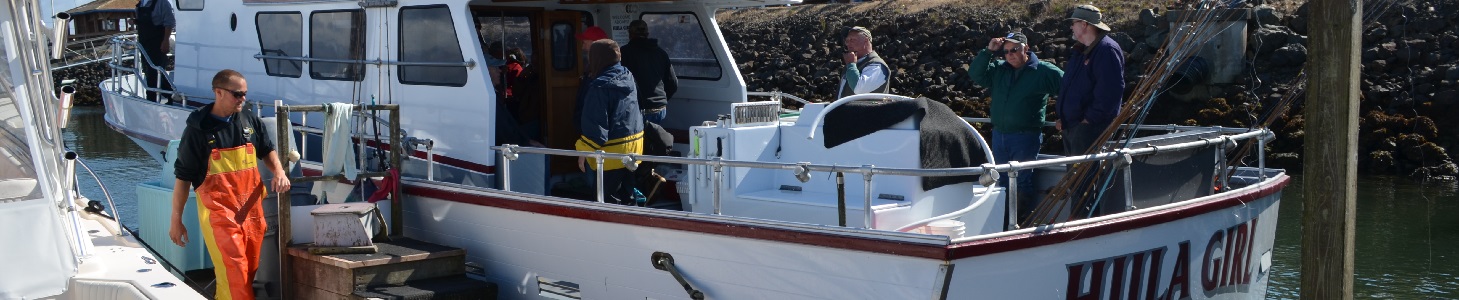
A CPFVi boat on which fishing space and privilege are provided for a fee per angleri.
Fish living near the surface or in the water column of the ocean. Marine pelagici fish can be divided into coastali (inshore) fish and oceanic (offshore) fish. Coastal fish inhabit the relatively shallow and sunlit waters above the continental shelf, while oceanic fish inhabit the vast and deep waters beyond the continental shelf.
A man made structure made with poles projecting from the bottom out of the water and covered with a platform on top so that waves may pass under the platform.
Sitei efforti check. Site visit for the purpose of estimating angleri effort (numbers of anglers and boats).
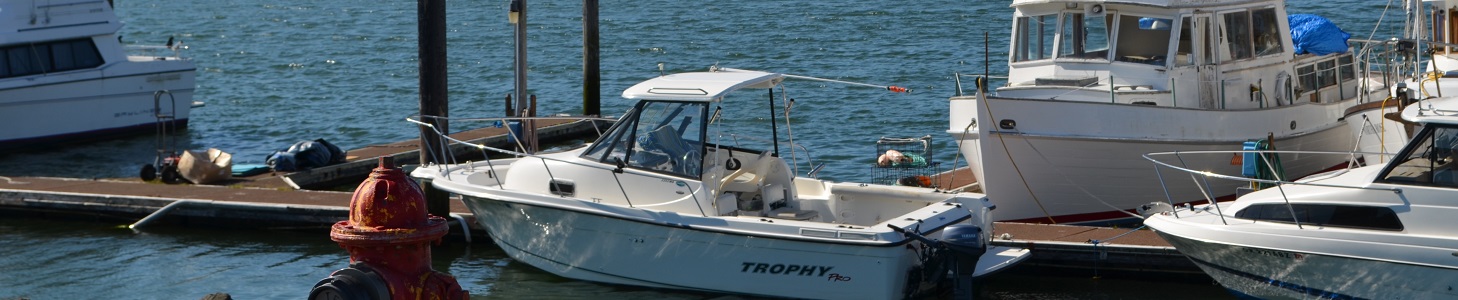
The private or rental boats that access the water from marinas, moorings and slips (not launch ramps).
A boat belonging to an individual not for rent or with paying passengers.
Boat launch rampi. Roadway leading down into the water for the purpose of launching a boat from a trailer.
With no pattern. Occurring sporadically or intermittently in an unpredictable way.
A method of selecting a sample from a population in such a way that every possible sample that could be selected has an equal probability of being selected.
Pursuit of fish for sport rather than for commercial or monetary purposes.
An areai in the water where living things or their habitat is controlled. May be a place where fishing is not allowed so that fish can reproduce, grow and migrate from.
A denial on the part of the angleri to be interviewed by the sampler or to refuse a key item during the interview.
An areai of interest. In CRFSi, California is split into two subregions; North and South. The split occurs at San Luis Obispo/Santa Barbara county line. This is based on historical fishery related differences.
A boat that is rented without crew or a guide.
Selection of an unbiasedi or randomi subset of individual observations to acquire some knowledge of a statistical population.
Animals with shells such as clams, lobsters, squid and abalone (crustaceans and mollusks).
Fishing accessed on beaches, banks and man-made structures.
A visit to a fishing sitei to check for efforti or CPFVi boat status.
The numeric codei used to store the location for a sample.
The codei on the ASFi which indicates the status of the sitei visit and the reason for leaving the site.
The name of a fishing sitei, such as the name of a fishing pieri or launch rampi.
A complete list of sites with names, codes and descriptions for some geographic areai.
A commercial passenger fishing vessel which has a license to take not more than six paying passengers at a time.
An interview in which specialized interview procedures were designated.
The letter codei which designates a special fisheryi interview.
A specific five letter codei or three digit code used to record fish taxon on the surveyi forms.
A location on the water that has been issued a codei to match a name so that map coordinates are automatically found in the database.
A non-angleri coded on the angler form for the purpose of recording a person who was not interviewed.
A regular predictable pattern. Used in samplingi when true randomness is not possible.
Any sample drawn from a list using a randomi start and a fixed samplingi interval (e.g. every Nth boat). An efficient and functional equivalent to random samplingi.
Fishing for the primary purpose of catching a particular species or species groupi (the targeti species).
Regulations adopted by the California Fish and Game Commissioni, through their regulatory powers function, are printed in the California Codei of Regulations, Title 14i, Natural Resources. There are 28 separate California Code of Regulations.
For CRFSi, an expanded number based on a statistical sample with inference to the population for all modes combined.
A fishing contest for which participants register and compete.
Free of non-randomi effects that tend to move an estimate higher or lower in prediction of the true population.
Independent verification, generally by field samplingi, of information received through telephone surveys.
A sample of CPFVi activity based on checking sites for docked status and typei of activity if not docked.
A unique seven digit codei used by the Partyi Charter Phone Surveyi (PCPSi) to identify a CPFVi.
Normal hours of the day when people, in general, are active. Generally considered daylight hours.
A device which can detect the presence of a metallic object, such as an internal tagi, when passed over the surface of the fish.
A fixed platform that originates on land and projects into a harbor, ocean, etc., so that vessels may be moored alongside. See Pieri.
Western Pacific Fisheries Information Network